


Frozen Cold Storage Room Manufacturer | Element
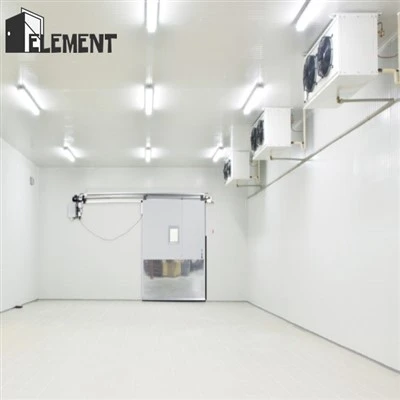
Element provides customized frozen cold storage solutions for food processing plants, seafood storage facilities, meat warehouses and frozen food distribution centers.
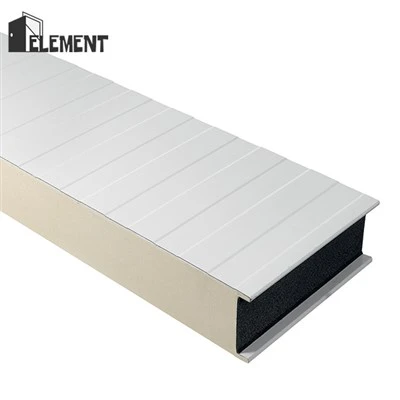
A frozen cold storage room is designed to maintain stable low temperatures for the long-term storage of frozen products. Its main components include PU insulated sandwich panels, freezer doors, floor insulation and a suitable refrigeration system.
Henan Element New Materials Co., Ltd. manufactures high-performance polyurethane (PU) insulated panels and cold storage doors for commercial and industrial refrigeration projects.
Depending on the required storage temperature and project conditions, we can recommend suitable panel thicknesses, door configurations and insulation structures.
Recommended PU Panel Thickness for Frozen Cold Storage
Choosing the correct insulation thickness is essential for maintaining stable temperatures and reducing refrigeration energy consumption.
The following table provides preliminary panel selection guidance:
| Storage Temperature | Suggested PU Panel Thickness | Typical Application |
|---|---|---|
| 0°C to +5°C | 75–100mm | Chilled food storage |
| 0°C to -5°C | 100mm | Fresh food cold rooms |
| Around -18°C | 150mm | Frozen meat and seafood |
| Around -25°C | 175–200mm | Frozen food warehouses |
| Around -35°C | 200–250mm | Low-temperature freezer rooms |
The recommended thickness is a preliminary reference. Final specifications should consider outdoor temperature, room dimensions, operating hours, door opening frequency, floor construction and refrigeration capacity.
For ultra-low-temperature storage below -40°C, a dedicated engineering assessment is required. Standard PU panel specifications should not be assumed suitable for -80°C applications without verification.
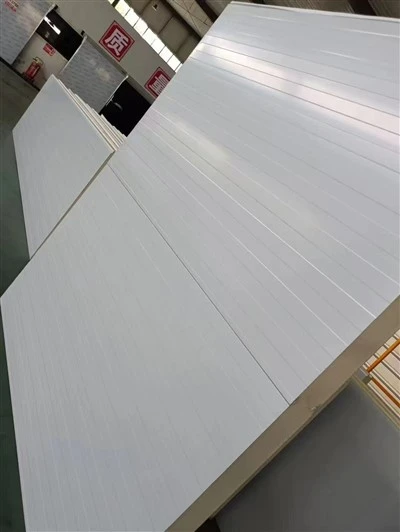
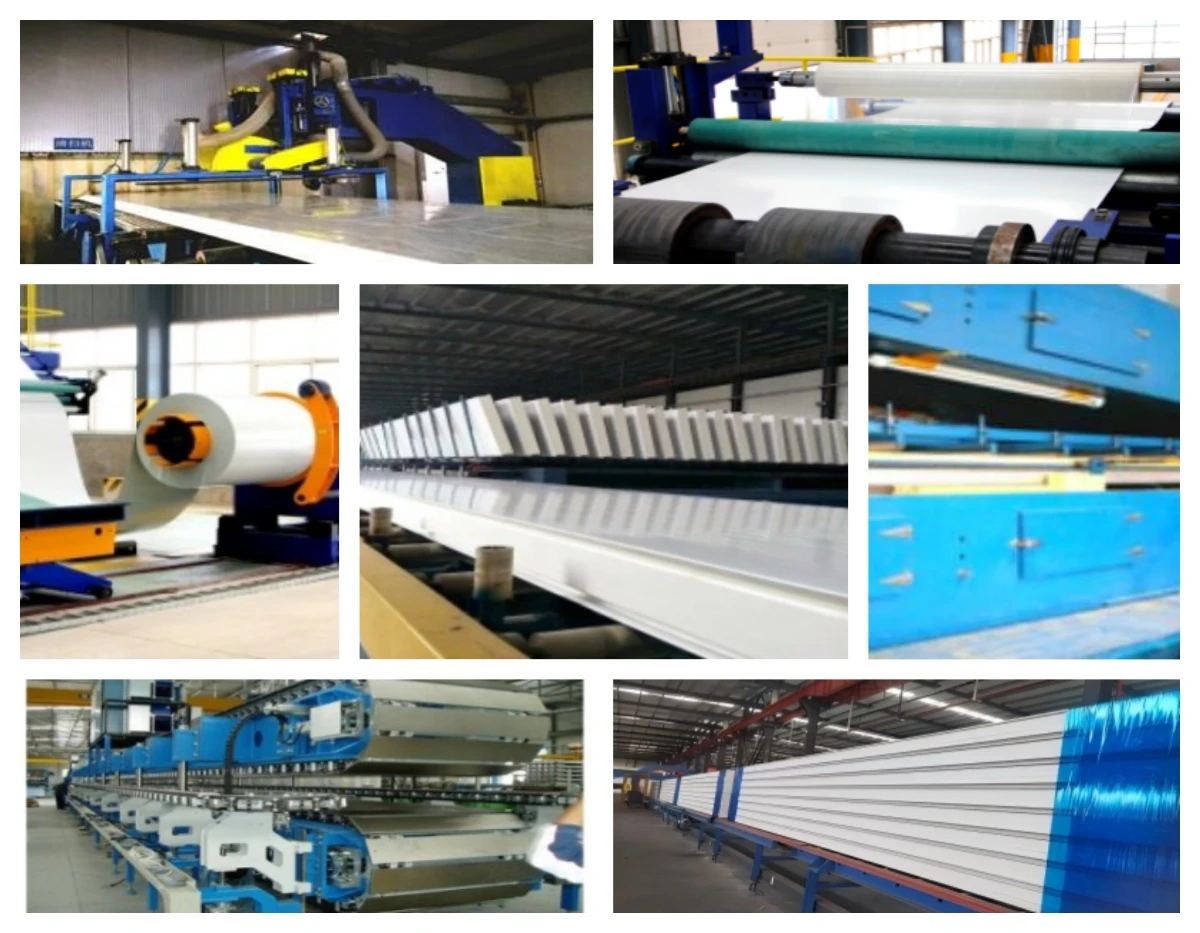
Factory Workshop
Frozen Cold Storage Panel Manufacturing at Element
Henan Element New Materials Co., Ltd. specializes in manufacturing PU insulated sandwich panels for cold storage and freezer room applications.
Our factory uses two Italian PUMA automatic PU production lines to manufacture insulated panels for different project requirements.
The main manufacturing process includes:
Steel coil preparation and uncoiling.
Metal sheet roll forming and surface protection.
PU raw material mixing and foam injection.
Continuous foaming and double-belt curing.
Automatic panel cutting according to project dimensions.
Finished product inspection.
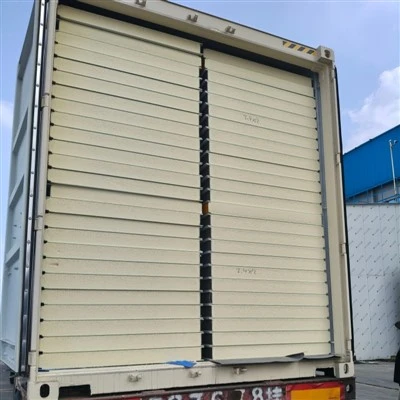
Protective packaging and export loading.
Element focuses on panel thickness, foam density, metal facing quality and dimensional consistency to meet different cold storage construction requirements.
We also provide technical consultation, project drawings and online installation guidance.
Applications of Frozen Cold Storage

Frozen Cold Storage Project in the Philippines
Element supplied PU insulated panels for a frozen food storage project in the Philippines.
Project Requirements
Application: Frozen seafood and meat storage
Project Location: Philippines
Target Storage Temperature: Approximately -25°C
Insulation Material: Rigid Polyurethane (PU)
Panel Thickness: 150mm
PU Core Density: 42 kg/m³ ±2 kg/m³
Metal Facing: 0.5mm galvanized steel
Element's Solution
Element provided customized 150mm PU insulated panels designed for the project's low-temperature storage requirements.
The panels were manufactured using automatic PU foaming equipment and prepared for international transportation.
This project demonstrates Element's manufacturing experience in supplying insulated panels for frozen food storage applications.
Recommended PU Panel Thickness for Frozen Cold Storage


Choosing the correct insulation thickness is essential for maintaining stable temperatures and reducing refrigeration energy consumption.
The following table provides preliminary panel selection guidance:
| Storage Temperature | Suggested PU Panel Thickness | Typical Application |
|---|---|---|
| 0°C to +5°C | 75–100mm | Chilled food storage |
| 0°C to -5°C | 100mm | Fresh food cold rooms |
| Around -18°C | 150mm | Frozen meat and seafood |
| Around -25°C | 175–200mm | Frozen food warehouses |
| Around -35°C | 200–250mm | Low-temperature freezer rooms |
The recommended thickness is a preliminary reference. Final specifications should consider outdoor temperature, room dimensions, operating hours, door opening frequency, floor construction and refrigeration capacity.
For ultra-low-temperature storage below -40°C, a dedicated engineering assessment is required. Standard PU panel specifications should not be assumed suitable for -80°C applications without verification.
Frequently Asked Questions About Frozen Cold Storage
Q1: What is frozen cold storage?
Frozen cold storage is a temperature-controlled facility designed to store food and other products at freezing temperatures. It commonly uses insulated PU panels, freezer doors and refrigeration equipment to maintain stable low-temperature conditions.
Q2: What temperature is suitable for frozen food storage?
Many frozen food products are stored at approximately -18°C or below. The actual storage temperature depends on the product type, food safety requirements and applicable regulations.
Q3: What thickness of PU panels is suitable for a -18°C freezer room?
150mm PU insulated panels are a common starting specification for -18°C freezer rooms. However, the final thickness should be determined by thermal calculations and project conditions.
Q4: Can Element provide a complete frozen cold storage solution?
Element can supply PU insulated wall and ceiling panels, freezer doors and related cold storage products. Refrigeration equipment configurations can also be discussed according to project requirements.
Q5: How long does it take to manufacture frozen cold storage panels?
The typical production lead time is approximately 15–20 days after specifications are confirmed and the deposit is received. The actual schedule depends on order quantity and production arrangements.
Q6: Does Element provide installation guidance?
Yes. Element provides installation drawings and free online technical guidance. Additional on-site engineering support can be discussed according to project requirements.